 Shark Sensei
Fuvahmulah15 min read
Fuvahmulah Dive Sites: 10 Sites and What to Expect
Tiger Harbour may bring you to Fuvahmulah, but the island has much more to explore. Get to know ten dive sites and the experience we ask you to bring.
- dive sites
- fuvahmulah
- advanced open water
- tiger harbour
- thoondu

Tiger sharks bring many divers to Fuvahmulah. Once you are here, it is worth making time for the rest of the island underwater: its reefs, drop-offs and the open water beyond them. Choosing where to dive starts with understanding the conditions and the kind of diving you are prepared for. A shallow tiger shark dive and a deeper reef drift can ask very different things of the same diver. This guide covers ten sites from our diving programme — the ones we dive most regularly — with the certification requirements we use when planning those dives. It is a starting point for your trip; the final choice of site always depends on the conditions and the group.
Why Fuvahmulah is different
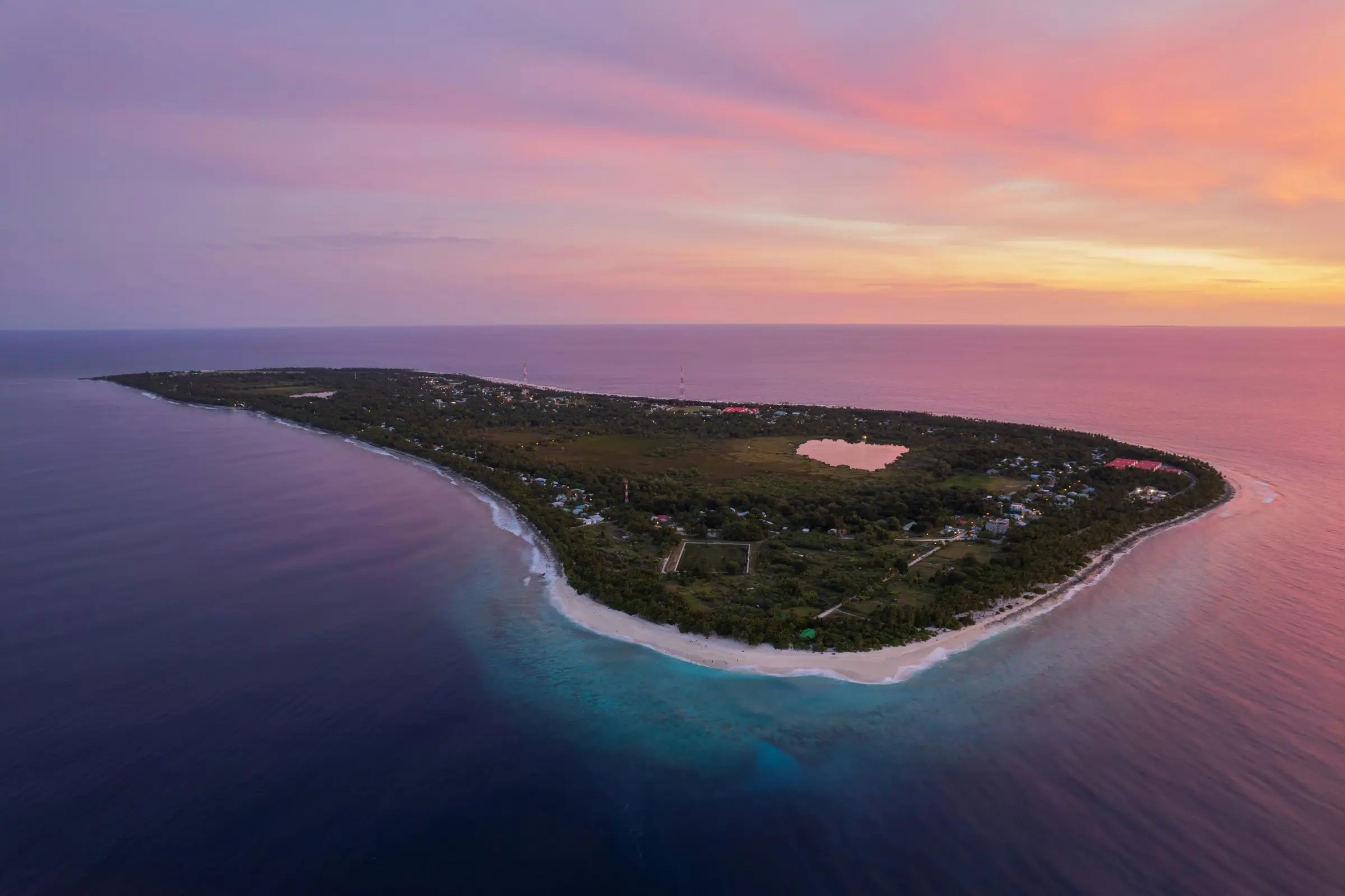
Fuvahmulah is a single-island atoll in the southern Maldives, with deep ocean on every side and no enclosed lagoon. The reef brings you close to that deep water almost as soon as the dive begins. From our experience diving around the island, the reef often begins dropping away from about five metres. Its shape changes as you descend: a steep section may open onto a ridge, a sandy slope or a small terrace before dropping again. Some of these features support cleaning stations. The profile varies between sites, giving each stretch of reef its own character. There is also much more coral life here than the shark photographs alone might suggest. On our dives between roughly five and thirty metres, we see healthy stretches of hard and soft corals. Hard corals dominate much of the western side, while the eastern side has more of a mixture of hard and soft corals. These are observations from the reefs we dive, and conditions vary from place to place. The island has recognised importance for sharks and rays, too. The Fuvahmulah Important Shark and Ray Area assessment identifies reproductive habitat for tiger sharks and documents pelagic thresher cleaning behaviour. That combination of coral reefs, changing underwater terrain and deep water is what makes diving here special. It is also why we generally recommend arriving with Advanced training: it gives you access to more of the diving we plan around the island.
What certification do you need?
For the dives described here, we accept Open Water certification at Tiger Harbour and require Advanced certification with appropriate deep training for the other nine sites. This is how we plan our guided dives, rather than a universal rule followed by every operator on the island. Our Tiger Harbour profile normally involves an approach at around 8–10 metres and stationary viewing at approximately 7 metres. For the other dives, thirty metres is our maximum, with shallower profiles used whenever training, conditions or the dive plan require them. Deeper reef features described below provide context for the habitat and are not depths offered on these dives. A reef extending below 30 metres does not mean every dive must reach that depth. We agree a profile within your training and applicable limits, and stay within it. Your recent experience, buoyancy and comfort in moving water also matter. An Advanced card alone does not make every site suitable on every day. Tell us your certification, logged dives and when you last dived before booking. If you hold an older qualification, send us the details of your deep training as well.
1. Tiger Harbour
Harbour entrance · Usually stationary at around 7 metres, with an approach around 8–10 metres · About 30 minutes stationary, 45 minutes in total · Open Water certification, subject to experience and conditions Tiger Harbour sits directly in front of the entrance to Fuvahmulah's working harbour. This is where divers can watch large tiger sharks at close range while remaining mostly stationary on a shallow shelf. It is also a place where understanding what happens above you is essential. Boats entering and leaving the harbour can pass directly over the dive area. Boat traffic is one of the site's most serious hazards, and the shallow depth does not make an unplanned ascent safe.
How the dive usually works
For the route we use, the boat drops the group to one side of the harbour entrance. Divers descend and approach the viewing area at around eight to ten metres before settling at approximately seven metres. Guests stay in that designated area for about thirty minutes, with the guide alongside them. With the ascent, the safety stop and the exit, the whole dive usually runs to about forty-five minutes. Entry, positioning and exit procedures are explained before getting into the water. The dive boat normally stays near the harbour area and displays a dive flag to alert other vessels to the group's presence. These precautions support the operation, but do not remove the hazard from passing boats.
Why the surfacing procedure matters
Guests should not make an independent ascent through the harbour traffic lane. For the exit procedure we brief, the safety team moves the group towards the side of the entrance and deploys a surface marker buoy (SMB) to signal the pickup boat before surfacing in the agreed area. The briefing also covers emergencies and how the team coordinates with the boat. The response must account for the actual emergency; this description is an overview of the site, not a substitute for that briefing or your emergency training. Tell your guide immediately if you have a problem underwater.
How food is used
Food is used to attract sharks on this dive, and it is controlled by the safety team. They decide whether to use it at all, after considering the animals’ behaviour and the conditions that day, and they place it themselves: a couple of tuna heads beneath rocks in a prepared area. The sharks are not hand-fed, and guests take no part in placing the food or handling the animals. The sharks investigate the area, sometimes retrieving the tuna heads and sometimes continuing to circle nearby. The guide remains with the guests while they observe. Explaining this openly matters: using food influences the encounter, even when no hand-feeding takes place.
What you can see
Some of the tiger sharks we encounter are around four metres long, with larger individuals we estimate at approximately four and a half metres. Watching an animal of that size pass nearby is an extraordinary experience. Individual sizes, numbers and proximity vary from dive to dive. The aim is to give guests time to observe while the team manages the group, the shark encounter and the working-harbour environment around it. Read more in our guide to tiger shark diving in Fuvahmulah.
2. Farikede — the plateau
Southern end · Advanced with appropriate deep training and experience diving in current · Often a blue-water drift Farikede is one of my favourite dives around Fuvahmulah. A long reef extension reaches south from the island, with a sandy plateau stretching roughly two kilometres. The wider reef system continues down to around ninety metres before another steep drop-off. Those deeper features describe the underwater landscape; our dives stay within a maximum of thirty metres. Currents here are often strong. In my experience, the south and south-east current patterns can make this a particularly rewarding dive. Much of the time we dive in the blue, drifting in open water rather than staying close to the bottom. Good depth control and awareness of the group are essential. There are opportunities to encounter thresher sharks, schools of scalloped hammerheads, oceanic mantas and whale sharks. Deeper parts of the reef also have cleaning stations used by silvertip and grey reef sharks. The excitement is in watching what comes through the water around you while staying within the planned profile.
3. Thoondu — thresher shark encounters
North to north-east corner · Advanced with appropriate deep training and experience diving in current This is one of the places I look for thresher sharks. Several cleaning stations lie around forty metres, with cleaner wrasse also present higher on the wall, around thirty metres. Threshers sometimes rise towards these shallower areas, creating opportunities to observe them within our dive limit. Forty metres is relatively shallow for thresher cleaning habitat, but it is beyond the thirty-metre maximum we use for these dives. We wait at our planned depth and let the sharks approach; we do not descend to a deeper station to follow them. The reef continues towards Hudhukede, where there are deeper cleaning areas. Oceanic mantas and whale sharks may pass through this part of the island, and mola mola are among the unusual visitors reported in my local experience. These possibilities add to the appeal, but the thresher habitat is what brings me back.
4. Neregando Fannu — north-west drift
North-west corner · Advanced with deep training · Usually a drift dive On this north-western stretch, the reef begins with a gentler slope. Coral growth starts in very shallow water, around one to two metres, and continues down to roughly twenty-five or thirty metres before the reef falls away more steeply. The deeper landscape has ledges, overhangs and further drop-offs. In my observations, some rocks around forty metres hold cleaner wrasse, while overhangs farther down carry soft corals. Those features are below our planned diving range; there is plenty to watch higher on the reef. Schools of butterflyfish, trevallies and fusiliers bring movement to the dive. On some days, large schools of fish locally called blackfish join them, and whitetip reef sharks can be seen hunting around the schools. We usually explore this reef as a drift. Thermoclines — boundaries between warmer and cooler water — can be noticeable around thirty metres and sometimes rise as shallow as ten metres. Their depth changes with the conditions.
5. Seafan — a slower look at the reef
East coast, near Tiger Harbour · Advanced with deep training for our planned profile Seafan is on the eastern side of the island, not far from Tiger Harbour. Its gorgonians, or sea fans, are the main attraction: a dive where you can slow down and spend time looking at the reef itself. When conditions suit, this is one of my choices for a more relaxed dive. Thresher sharks and other pelagic visitors are possible, but the sea fans give you a reason to enjoy the site whatever appears in the blue. “Relaxed” describes the kind of dive we choose it for, rather than a guarantee of mild conditions. The route and depth still depend on the water that day.
6. Bilhifeyshi — overhangs and soft corals
South-east coast · Advanced with deep training for our planned profile Overhangs begin around twenty-five metres, with more features continuing into the thirty-to-forty-metre range. Soft corals, large gorgonians and fish sheltering around the rock make this a rewarding stretch to observe from outside the overhangs and within our depth limit. There is also the possibility of passing hammerheads, threshers and other large ocean visitors. Exceptionally unusual animals, including leatherback turtles, are part of the local encounter stories I associate with this site. They are rare possibilities, not something to build an expectation around. The reef formations give this dive its character even when nothing large passes by.
7. Rasge Fanno — the old landing area
East coast · Advanced with deep training for our planned profile Before the present harbour was built, this was one of the island's main boat landing areas. Ropes and anchor lines remain around parts of the rocky reef, linking the underwater landscape to that history. They also deserve attention as potential entanglement hazards. The profile is mostly a steep drop-off, with patches of hard and soft coral breaking up the rock. Some sections are sparsely covered, while others offer coral growth and smaller life worth slowing down to look for. Deeper cleaning stations lie at approximately forty-five to fifty metres. We do not dive down to them on these trips, but threshers can move through the surrounding water. If we have not seen threshers at Thoondu, this is another place I consider, depending on conditions.
8. Gemmiskih Fanno — the northern wall
North-facing coast · Advanced with deep training for our planned profile At the northern end of the island, Gemmiskih Fanno offers a colourful wall with a mixture of hard and soft corals. Coral growth begins around five metres, with the reef dropping steeply from roughly eight to ten metres in places. Current and thermoclines are familiar features here in my experience. A variety of pelagic animals may pass this northern stretch, so it is worth watching the open water as well as the reef. Even without a large visitor, the coral-covered wall makes this a dive I enjoy. It is a reminder that Fuvahmulah's reefs deserve as much attention as its sharks.
9. Maaneyre
West coast · Advanced with deep training for our planned profile Maaneyre is on the western side of the island, with reef topography much like Dhadimago Fanno and Neregando Fannu: a gentle slope carrying hard corals before the reef falls away into deeper water. The same possibilities apply along this coast. Big schools of fish gather here, and pelagic visitors pass through. What sets Maaneyre apart is the number of cleaning stations along the reef. Watch the open water as well as the reef, and keep your depth and your position relative to the group in mind as you do.
10. Dhadimago Fanno
West coast · Advanced with deep training for our planned profile Dhadimago Fanno sits on the western side of the island and has the same gentle slope you find along this coast, with big hard corals across it. It is a site where it pays to watch the open water as well as the reef. Big schools of fish gather here, and where the schools are there is usually something moving through them. Pelagic visitors are a real possibility rather than a promise. As with the other deeper reef dives, we choose it according to conditions and the divers joining us.
Planning your week around your experience
If you arrive with Open Water certification, Tiger Harbour is the site available to you among the sites described here, subject to our assessment and the day's conditions. If you want to join the deeper reef dives as well, discuss the necessary training with us before arranging your trip. There is no need to arrive feeling you must prove yourself. Tell us if you have had a long break from diving or have limited drift experience. That helps us plan a week you can enjoy. Our SSI Tiger Shark Eco Diver course is open to qualified Open Water divers with at least 20 logged dives who meet the other prerequisites. It focuses on shark biology, behaviour, observation and conservation. It does not replace deep-diving training, and practical dive locations are confirmed for the course and conditions. SSI introduced its updated Advanced Open Water Diver programme in October 2025, replacing Advanced Adventurer. If you have an older card, tell us which training dives you completed so we can assess the relevant experience. SSI programme update.
Wildlife and conditions: keep some flexibility
Tiger sharks and pelagic threshers have been documented across the year around Fuvahmulah. Their presence in the wider area does not guarantee an encounter on a particular dive. Fuvahmulah wildlife assessment. Weather, visibility and current also affect which sites are suitable. Ask what conditions and sightings have been like when planning your visit, and leave room for the schedule to change. A useful itinerary gives the team options.
The practical side of diving here
Good preparation covers more than shark encounters. Before diving, make sure you understand:
- Entries, exits and boat traffic. Know how the boat team will manage the dive, especially at the harbour entrance.
- Depth and current. Understand the planned profile, group procedures and what to do if conditions change or you become separated.
- Your equipment and readiness. Raise any concerns about buoyancy, fitness, recent experience or unfamiliar equipment before entering the water.
- Emergency arrangements. Ask your operator about emergency oxygen, communications and evacuation planning. Check that your dive accident cover includes the diving you intend to do and relevant treatment and evacuation.
Complete the required medical screening before training, and obtain medical clearance where the screening or programme requires it.
Come for the sharks, make time for the island
The best week in Fuvahmulah is one planned around your interests, experience and the water we find each day. You might come for Tiger Harbour and leave remembering a reef dive just as clearly. If you want to understand the tiger sharks more deeply, explore the SSI Tiger Shark Eco Diver course. Diving professionals interested in training for responsibilities around other divers can read about the SSI Tiger Shark Safety Diver course and its prerequisites. Tell us what qualification you hold, when you last dived and what you hope to experience. We will help you work out what your time here can look like.
Ready to meet them in the water?
The theory is studied online and the diving happens in Fuvahmulah. Ask about a course and the school will reply about suitability and dates.