 Shark Sensei
Fuvahmulah4 min read
Diving with tiger sharks in Fuvahmulah
One island in the far south of the Maldives, no lagoon between it and the open ocean, and tiger sharks in residence all year. What the diving is actually like, and what it asks of you.
- tiger shark diving

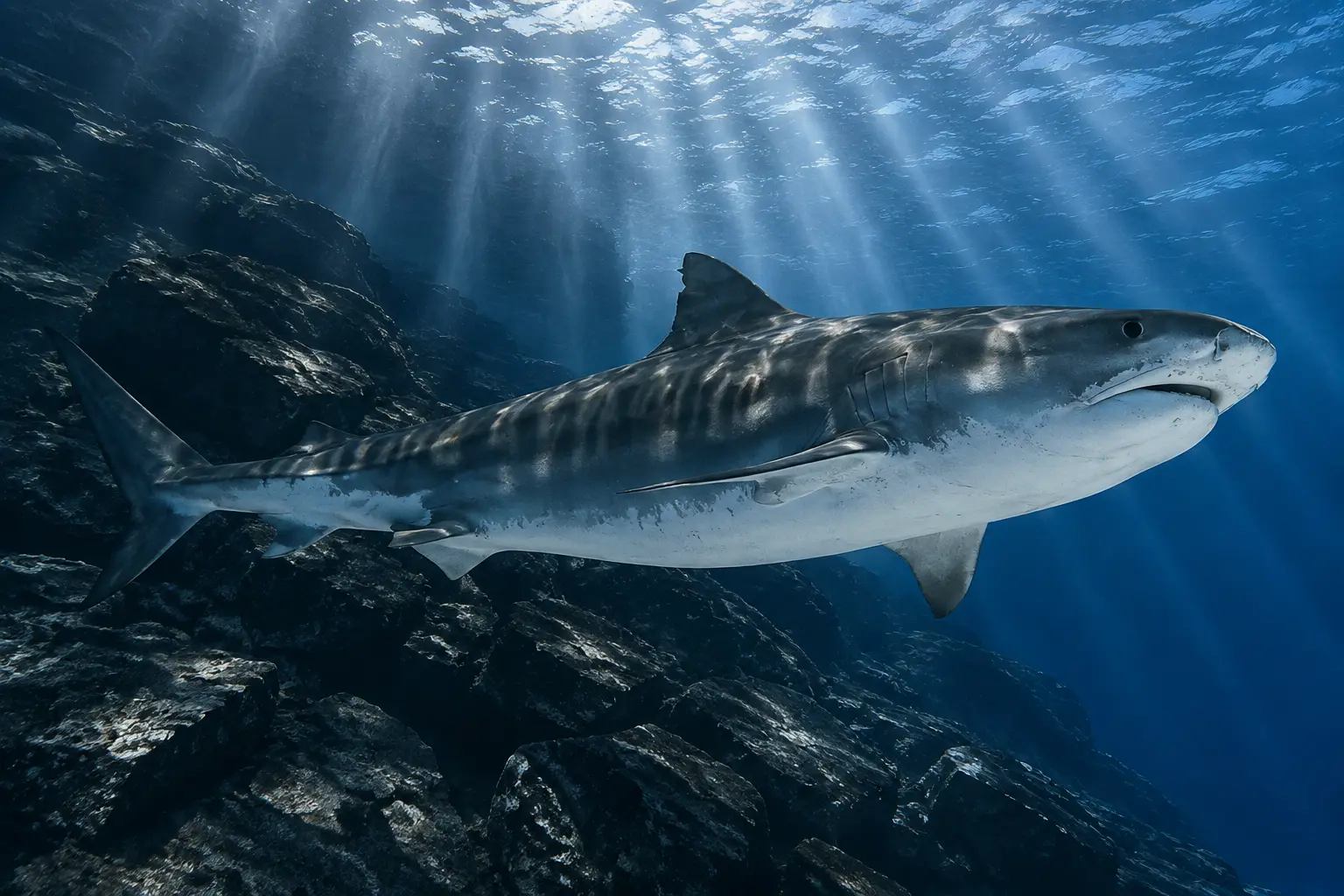
Most of the Maldives is a ring of reef around a lagoon, and most Maldivian diving happens in that sheltered water. Fuvahmulah is not built that way. It is a single island forming its own atoll in the far south of the country, with no lagoon between it and the open ocean, so the deep water starts more or less where the island stops.
That one piece of geography is why people fly here. Pelagic animals that elsewhere are a lucky encounter at the edge of a channel are, here, simply present — because there is no shallow buffer for them to stay outside of.
Why the tiger sharks stay
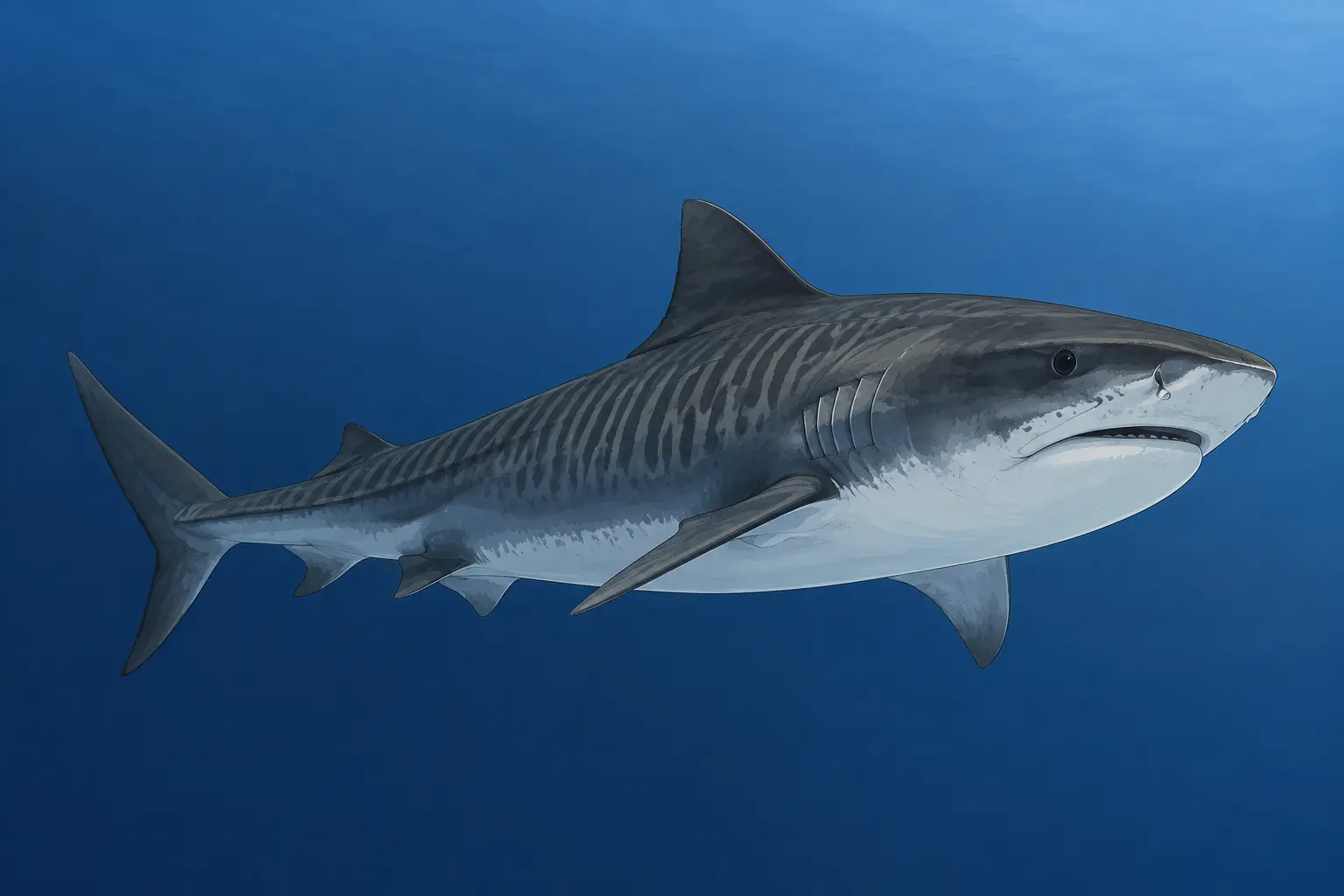
Tiger sharks are seen in a number of places around the world. What makes Fuvahmulah unusual is that they are seen reliably, at close range, and all year round rather than in a season. They are residents rather than visitors, and individuals are recognised and re-recognised over years.
This is worth being precise about, because it changes what a dive here is. You are not hoping for a sighting. You are entering water that a large predator already lives in, on its terms, and the whole of the training we teach is about what that asks of you.
The depth you work at
The working band for Tiger Shark Safety Diver training is 5 to 20 metres. That is shallower than people expect of big-animal diving, and it matters for two reasons: it is well within recreational limits, so no technical qualification is needed, and it leaves a comfortable margin of no-decompression time to spend watching rather than counting. Recreational dives are planned to a maximum of thirty metres, with the site and the certification you hold deciding where in that range each dive sits.
What is done, and what is not
There is no hand-feeding. There is no touching. Neither is taught on any of our courses and neither is permitted on our dives.
Bait is a different question, and we use it. It is placed by the safety team, never by guests and never by hand, and only after the team has considered the animals' behaviour and the conditions on the day. This is a real position rather than a disclaimer. Hand-feeding teaches a shark to associate divers with food, and that is what changes the dive for everyone who follows you into the water. Reading the animal comes first; the bait is there to hold a predictable encounter, not to manufacture one.
Every dive is instructor-led and group sizes are kept small. That is a limit on how many people we take, not a marketing line.
What it asks of you
Sound buoyancy control, and the ability to stay calm and still. Those two things do more for your safety and for the quality of the encounter than any amount of shark knowledge, because a diver who is finning to hold position is a diver who is unpredictable to the animal beside them.
The entry-level course asks for an Open Water certification and at least twenty logged dives for exactly this reason: so the training can be about the sharks rather than about basic skills.
Where to start
If you are coming to dive with the sharks and want to understand what you are looking at, that is the Tiger Shark Eco Diver specialty. If you are a working divemaster or instructor who will be responsible for other people in this water, that is the Tiger Shark Safety Diver certification, and Eco Diver is one of its prerequisites.
The difference between the two is set out in full on the comparison page, including what each one costs and what each one qualifies you to do.