 Shark Sensei
Training4 min read
The Missing Standard in Shark Diving
Shark diving is growing worldwide, but professional training for the people responsible for leading recreational divers into shark encounters has not kept pace. SSI Tiger Shark Safety Diver Speciality Course was created to close that gap.
- Shark safety training
- shark diving
- tiger shark safety diver

Shark diving has changed dramatically over the past decade. More divers are traveling specifically to encounter sharks. More dive centers are building their businesses around shark diving. Destinations such as the Maldives, Bahamas, Fiji, South Africa, French Polynesia and Australia have become internationally recognized for shark encounters. The demand is there. The divers are there. The sharks are there. But there is a problem.
Where does a professional diver go to learn how to safely lead recreational divers around sharks?
There are excellent scuba-diving qualifications. There are shark ecology and conservation specialties. There are experienced shark-diving operators with years of knowledge and highly developed local procedures. But for a professional Divemaster or Instructor who wants to specialize in leading recreational divers around sharks, there has historically been no clear, standardized professional pathway. Much of the knowledge is still learned informally. You work alongside an experienced shark guide. You observe. You gain experience. You learn the local procedures. Eventually, you are trusted to lead. Experience is essential. But experience alone does not create a consistent professional standard. And as shark diving continues to grow, the industry needs more than experienced individuals. It needs trained professionals who understand shark behaviour, diver management, positioning, risk assessment and emergency response.
Different destinations. Different systems.
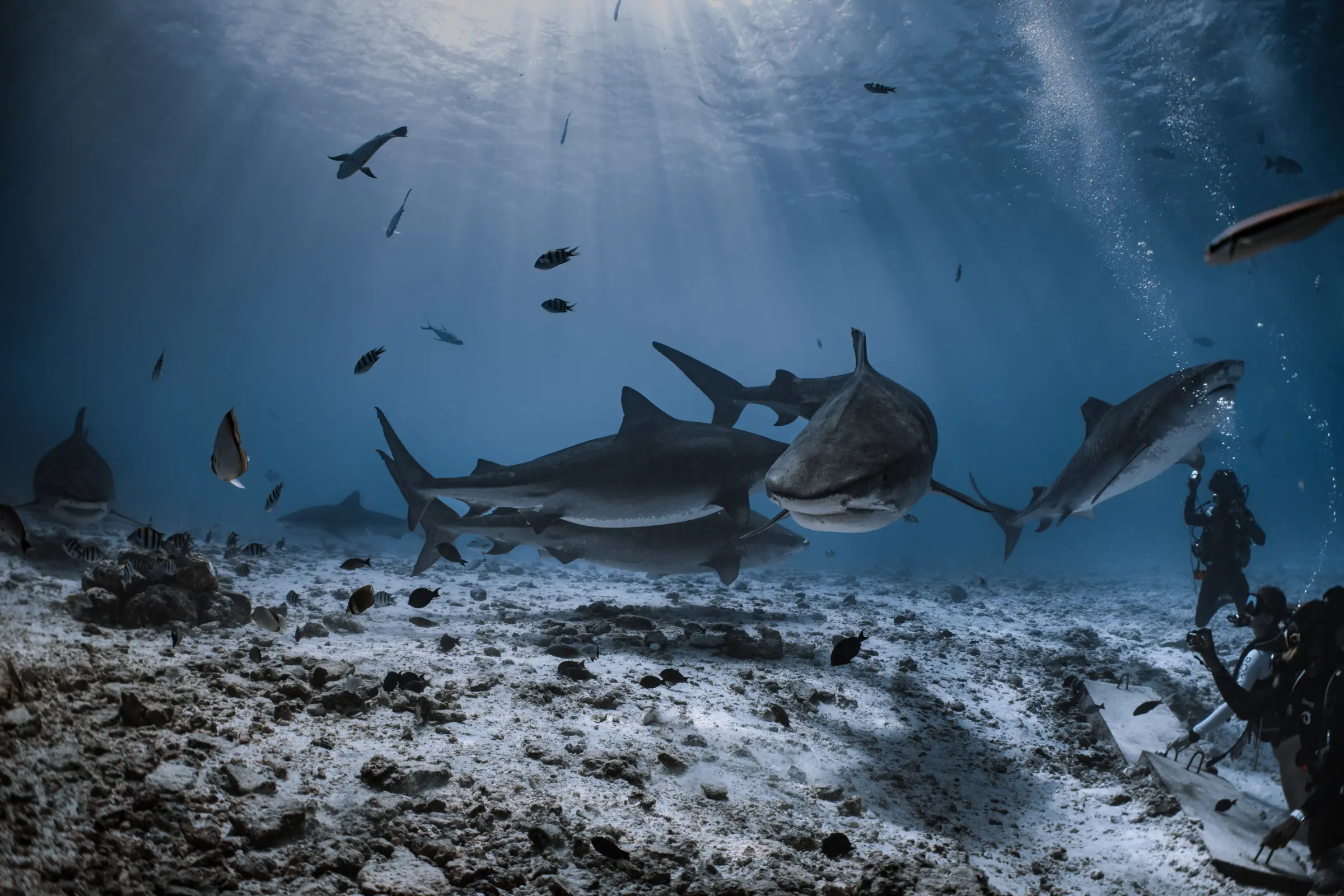
Around the world, shark-diving operators have developed their own approaches. Some use dedicated safety divers. Some use shark handlers. Some use physical barriers or poles for shark redirection. Some operate baited dives. Others rely primarily on positioning, observation and group management. These systems are often built from years of local experience, and many are extremely effective. But they are not a universal professional qualification. A diver trained to lead shark dives in one destination may arrive in another destination with completely different procedures, expectations and risks. That creates a gap between being an experienced diver and being professionally trained to lead shark encounters.
The solution
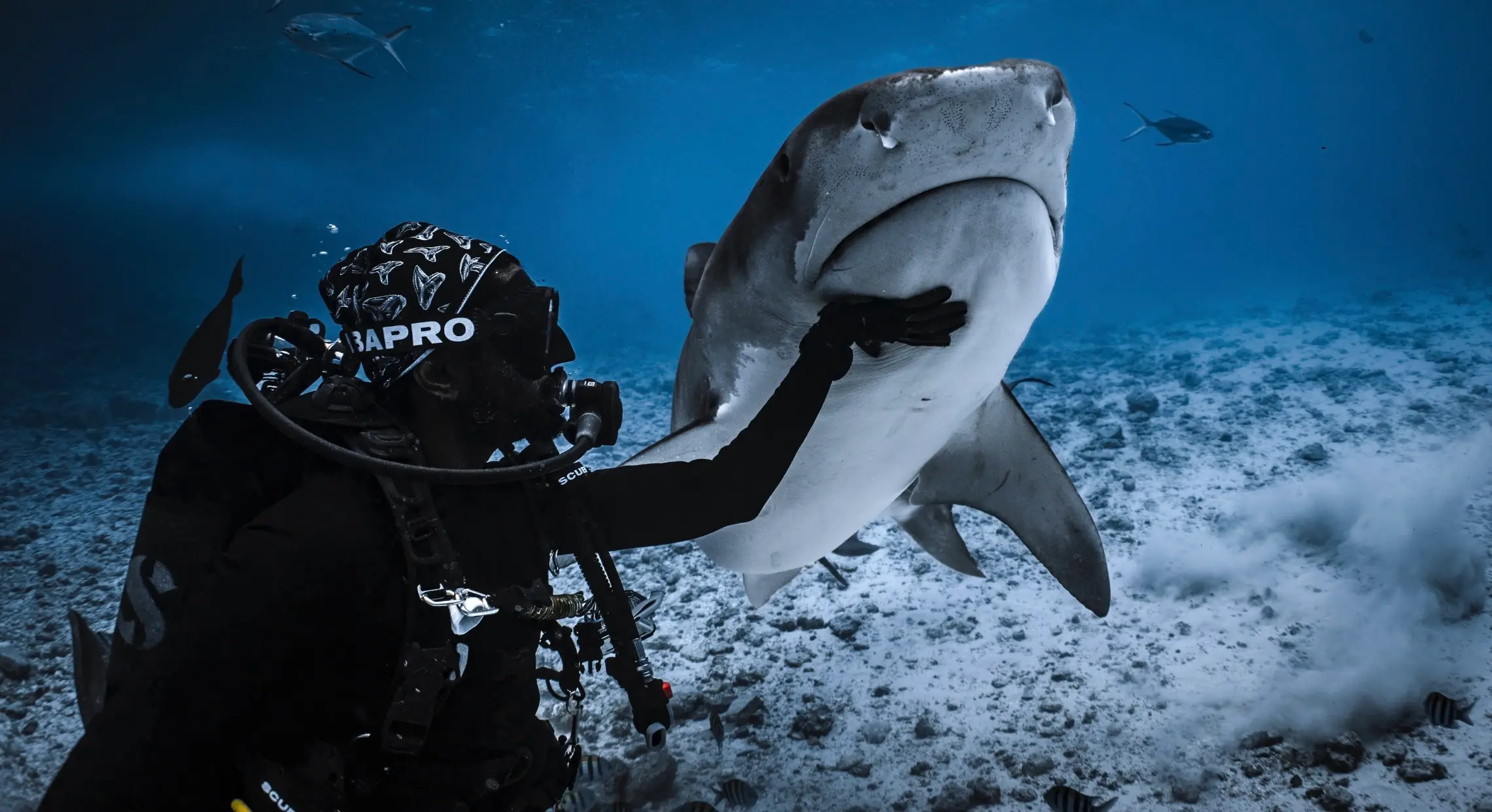
That is why SSI Tiger Shark Safety Diver Speciality was created. We wanted to establish a professional training pathway specifically for divers who are responsible for leading recreational divers in the presence of tiger sharks. The focus is not simply on knowing facts about sharks. It is about understanding the complete operating environment. A professional safety diver needs to understand shark behaviour and recognize changes in behaviour. They need to manage groups of recreational divers, maintain appropriate positioning, recognize developing risks, communicate effectively and know when intervention is necessary. They also need to understand what happens when something goes wrong. Because professional shark diving is not only about the shark. It is about the shark, the divers, the environment and the decisions made by the professional responsible for the group.
From experience to professional competency
SSI Tiger Shark Safety Diver was built around the principle that professional shark diving should be based on demonstrated competency, not simply participation. The program combines shark-specific knowledge with practical training and assessment, creating a structured pathway for professionals who want to work with tiger sharks. The course has been incorporated into the SSI specialty system, giving successful candidates an internationally recognized SSI certification. That is an important step. But the certification card is not the objective. Raising the standard is. As shark tourism continues to expand, dive centers will need professionals who have been specifically trained for these environments. The industry already knows how to train divers to scuba dive. It knows how to train Divemasters to guide divers. It knows how to teach shark ecology.
What has been missing is the bridge between those disciplines:
Tiger Shark Safety Diver was created to build that bridge. And we believe this is where the next generation of professional shark diving begins.
Ready to meet them in the water?
The theory is studied online and the diving happens in Fuvahmulah. Ask about a course and the school will reply about suitability and dates.